Chapter 17, The Smoking Kipma
We slip out of the tunnel’s throat and the world opens up, first with the smell, then the noise, then the press of bodies moving in the half-light like fish in a bottomless river. The Arena District. My mind hums with the Bond’s intensity, that psychic leash burning shorter and tighter with every step Master takes, but here, in this crowded bowl of violence and commerce, even my obsession is momentarily numbed by the pulse of life, the scent of old blood, cheap spirits, and ambition.
I barely remember the place where the fight went down, the ghosts of pain and steel already faded in the air, no one here looks twice at us, and why should they? Down here, everyone’s too busy betting, scheming, or just trying to survive another day without ending up in the pit. Nobody notices the walking dead or the walking victorious; all that matters is what you can take, and what you can keep. Master’s presence is a silent anchor, but the Bond is so close it hurts, my mind echoing with his passing thoughts, flashes of memory, detail, calculation.
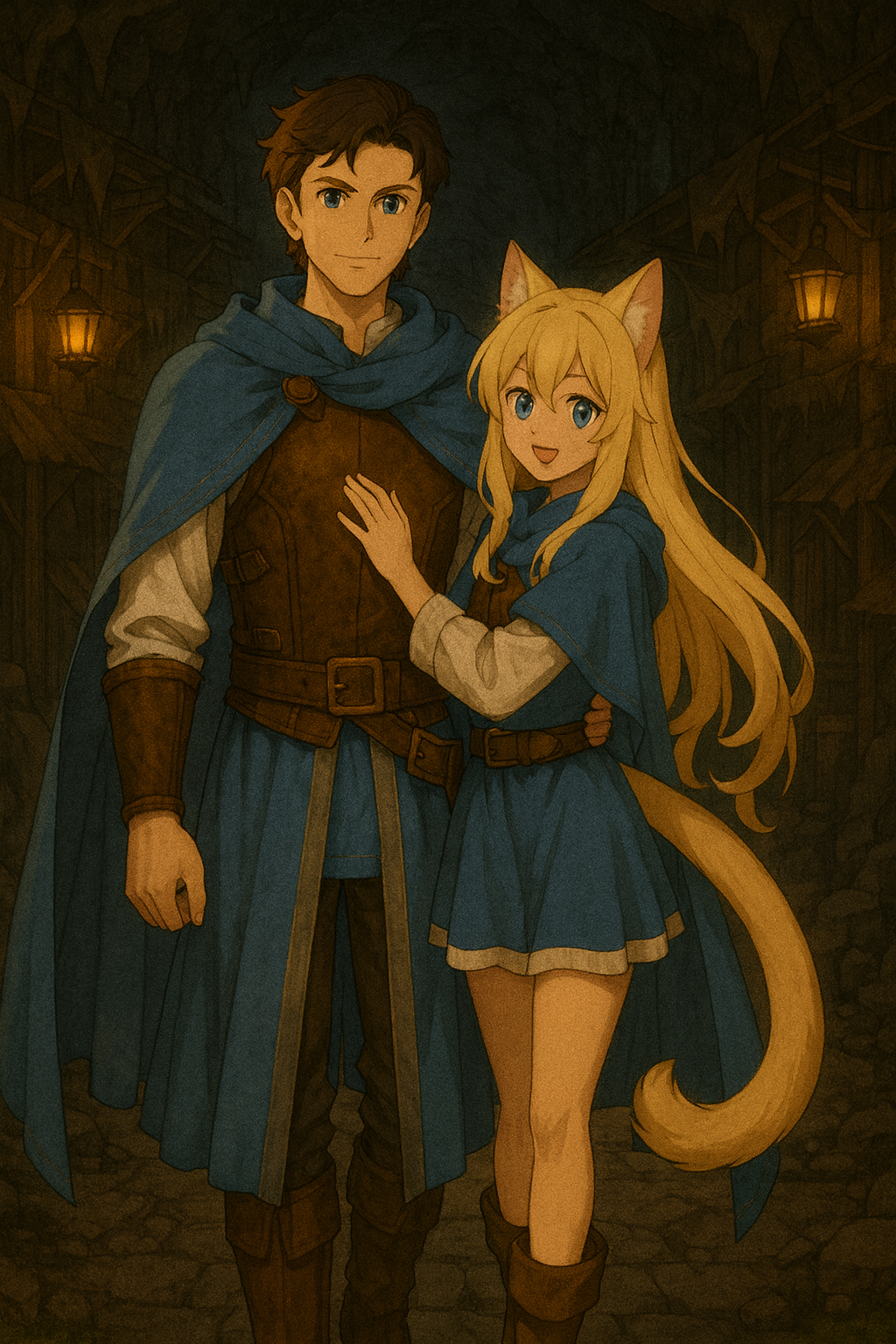
His gaze drifts north, and I feel the cold touch of nostalgia and analysis: Arena district hasn’t changed. Guards here actually look like they’d care if a riot broke out. Mixed races, but even the goblins and catfolk keep their heads down. South, Kipma Inn, smells like a bonfire in a slaughterhouse. North, Black Fang’s main den. Remember the first week in Redstone Hold. Aliza competed in that arena. She nearly ripped that dwarf’s throat out with her bare hands. Clan Redstone loved it. Blood in the sand. Glory in the eyes of those too hungry for fear.
His thoughts flick to me, running a pulse of possessiveness down the Bond, an old memory of pride and terror, mingled in the way only I ever seem to conjure from him. I remember it too, the roar of the crowd, the dust choking my throat, the taste of adrenaline and the promise that, for a moment, the world watched me and saw a monster worth fearing. I let the memory slip across my tongue, tail flicking as if to taste the crowd’s energy again, the echo of claws on stone and blood pooling in the grooves.
The arena itself stands squat and square, a monolith of carved sandstone, chipped at the edges but strong, unyielding, a place where names are made and erased in equal measure. I remember the weight of expectation, the glee in the faces of those who cheered for violence not out of hatred, but out of longing, longing for something to believe in, even if it was only the certainty of the kill. That first week set the tone. Redstone Hold didn’t want heroes, it wanted survivors. It wanted spectacle.
All around us, the crowd swirls, indifferent, Alderians in dyed cloth, goblins with their hunched, feral grins, a smattering of dwarfs, even a pair of elves arguing over odds with a Kipma barkeep. No one spares us more than a glance. The guards, for once, look the part, steel helms, real spears, eyes cold and professional. They scan the district with boredom and violence just below the surface. Not corrupt mercenaries, not alley thugs, but men and women paid to keep order and crack heads as needed. They know the score. They know the cost of letting chaos in.
I stay glued to his side, shadowing every step, not a hand’s width between us. I let myself breathe in the chaos, the anonymity, the reminder that in a city of a thousand desperate souls, being invisible is the best shield you can buy. My eyes flick from face to face, always returning to his, always checking his pulse, his tension, his intent. He’s calm, for now, in the way only a man who has walked through fire learns to be.
I hear the crowd’s bets, the barkers calling out the next match, tonight it’s an ogre against a trio of Black Fang hopefuls. Odds are long. The crowd loves blood. I feel the urge to join them, to make my mark again, but the Bond won’t let me stray, not now, not ever. I’m tethered, obsessed, but grateful. There’s a strange safety in the focus, in the knowing I won’t lose him, not even for the roar of the crowd or the thrill of the kill.
We step through the battered door of The Smoking Kipma and the world shifts, outside is the filth, the pit, the exhausted sprawl of working men and blood-soaked sand, but in here, it’s all velvet deception and opulent decay. Smoke curls along the ceiling in thick, perfumed ribbons, sweet and rotten, heavy with the stink of exotic herbs, pipe-weed, and something sharper, almost chemical, lurking beneath. Every surface drips with gold leaf, the shine dulled by fingerprints and time, gilded mouldings climbing the walls, ornate mirrors reflecting back eyes that are too tired, too hungry, too dangerous to belong in a place like this.
The floor is a patchwork of cracked, painted tile, the kind that was laid by men who’d never set foot in a mine, now hidden under a threadbare carpet, the pattern faded by a thousand muddy boots. A grand staircase sweeps upward, banisters thick with dust, wood carved into lions and laurels that have lost their shine. Crystal chandeliers hang from the ceiling, heavy with cobwebs, their candlelight refracted through stained glass baubles that send fractured colours spinning across faces lined with worry and secrets.
The patrons are a study in ruin, fine silk sleeves frayed at the wrists, jewel-studded shoes splitting at the seams, necks adorned with chains and pendants, none of it enough to disguise the gaunt cheeks, the trembling hands. Some huddle over polished tables, playing cards for scraps, eyes darting at every newcomer, others lounge on red velvet settees, blowing smoke into the air, laughter brittle and sharp. On a dais, a woman in a tattered ballgown pours brandy with practised disdain, the crystal decanter catching the light, the drink itself the colour of rust.
The air thrums with low music, harp strings and something plucked and ancient, barely covering the quiet, desperate bargains struck in the shadows. Gold and powder change hands, whispers traded like threats, every smile edged with warning. Waiters in faded livery drift between the tables, balancing trays of half-eaten delicacies on trembling fingers, their eyes fixed on the floor, as if knowing that beauty and rot are only ever separated by a single, bloody line.
It’s all theatre, all illusion